Title IX and gender equity
The threat to gender equity
The survey highlights gender equity as a critical area of concern, with leaders signaling a serious risk that progress could be undermined in the new Division I model.
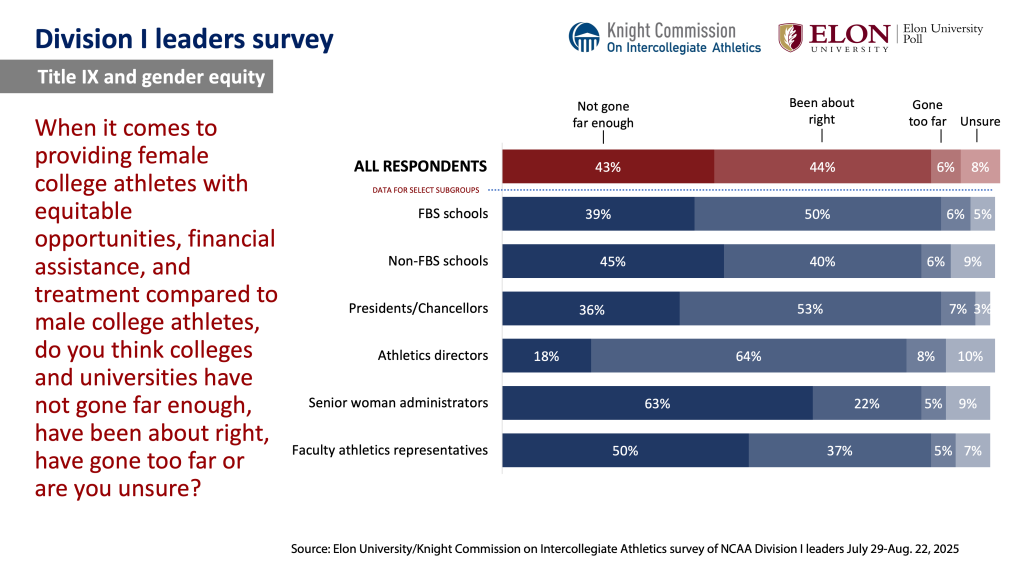
More work on gender equity needed: More than four in ten Division I leaders (43%) believe that institutions “have not gone far enough� in providing female college athletes with equitable opportunities, financial assistance and treatment compared to male athletes. While 44% believe institutions “have been about right,� only 6% of leaders believe institutions “have gone too far.�
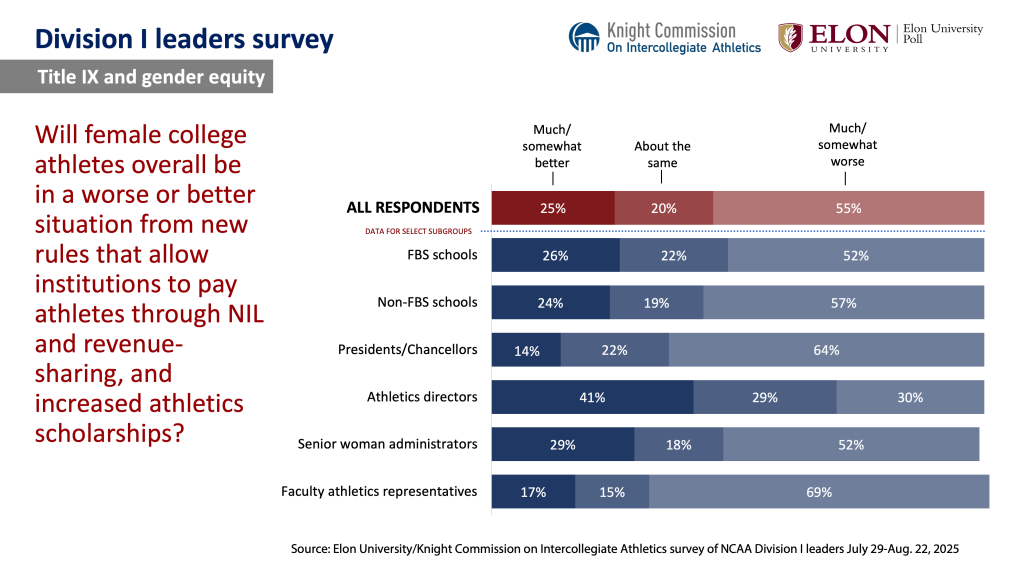
A warning sign for the future of women’s sports: The majority of campus athletics leaders (55%) predict that Division I female athletes will be in a worse situation under the new rules that allow institutions to provide new athlete NIL and “revenue-shareâ€� payments as well as offering more scholarships. The concern that women’s sports will be in a worse situation was even stronger among university presidents (64%).
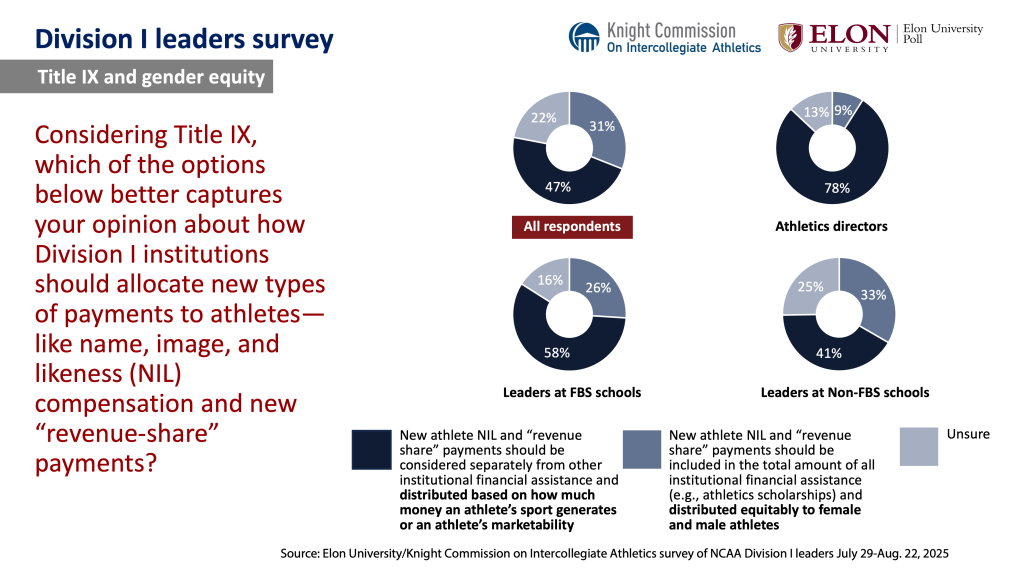
A fundamental challenge in applying Title IX: The deep division on how to allocate new revenue-sharing and NIL payments exposes one of the most complex legal and philosophical challenges ahead. Among all respondents, 47% say new types of institutional payments to athletes like NIL compensation and “revenue-share� should be “based on how much money an athlete’s sport generates or the athlete’s marketability.� However, 31% say the new payments “should be included in the total amount of institutional financial assistance (e.g., athletics scholarships) and distributed equitably to female and male athletes.� Nearly a quarter (22%) are unsure about how to allocate the new payments. As a subgroup, athletics directors hold different views on this question with more than three-quarters (78%) saying that these payments should be “based on how much money an athlete’s sport generates or the athlete’s marketability.�
> Text-only screen reader version of all charts in this report.