


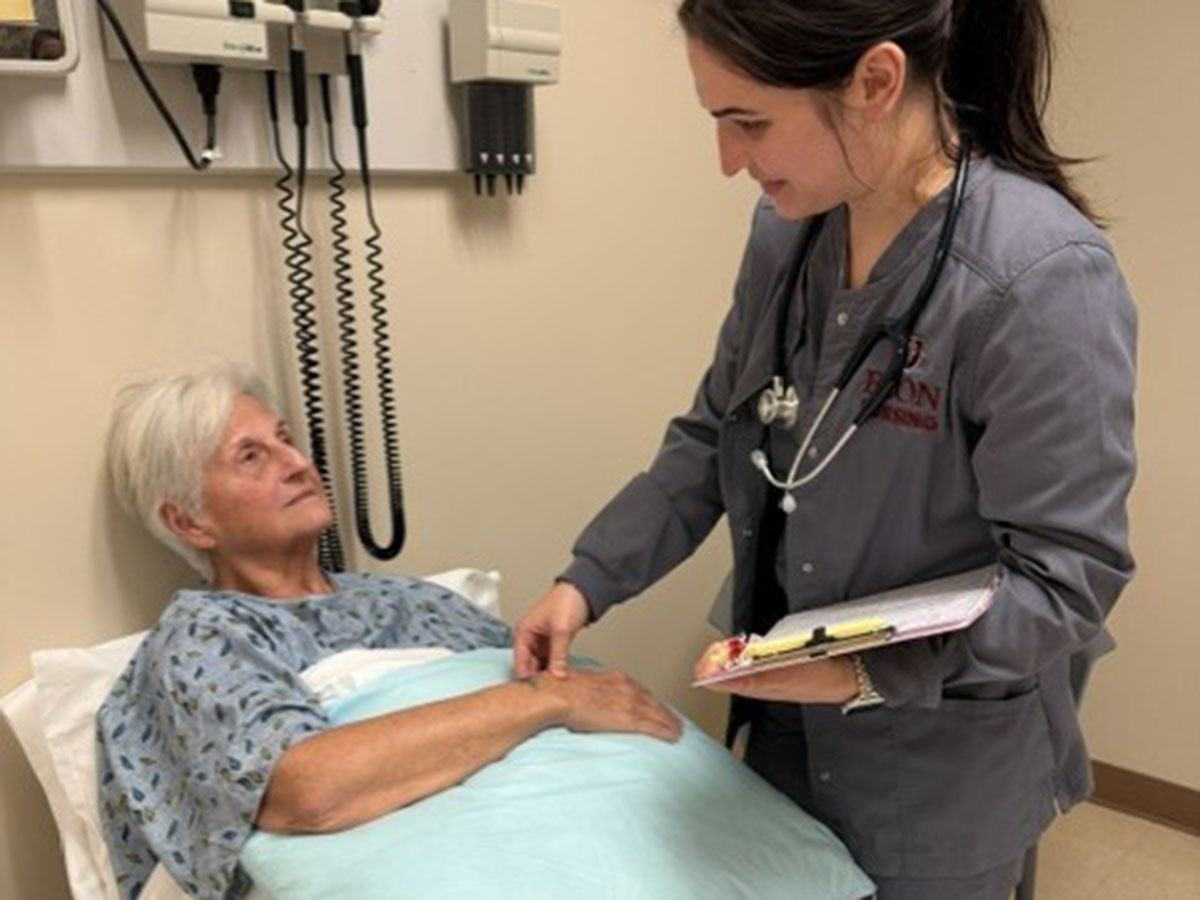
Through a stroke recovery simulation, 麻豆视频 nursing students develop the clinical judgment, communication skills and confidence needed to support patients through recovery.
As part of their program curriculum, students in both the Accelerated Bachelor of Science in Nursing (ABSN) and Bachelor of Science in Nursing (BSN) programs collaborated for a simulation focused on providing care for patients who are recovering from a stroke. The exercise was held in the Interprofessional Simulation Center (IPSC) within 麻豆视频鈥檚 School of Health Sciences.
“An acute stroke transforms a person’s life almost instantly, and nurses are positioned to provide holistic, restorative care throughout the recovery process,” said Brittany Kirby, 麻豆视频鈥檚 director of nursing simulation.聽“This simulation experience presents a formative opportunity for developing nursing students to interact with a person recovering from stroke and take action to promote comfort, dignity, and safety in a vulnerable care environment.”
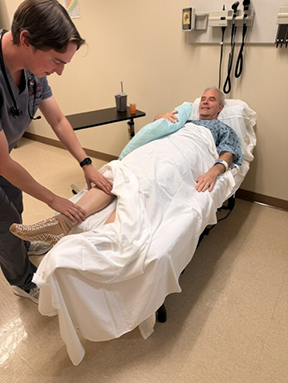
This hands-on learning opportunity allowed students to work one-on-one with simulated participants and develop and strengthen essential clinical skills. Among the skills that were practiced were focused assessment, clinical judgment, therapeutic communication and clinical documentation.
“Our simulated participants truly bring the textbook to life, helping nursing students bridge the gap between classroom learning and real-world patient care,” added Bethany Fearnow, 麻豆视频鈥檚 simulation coordinator. “Through experiences like this stroke recovery simulation, students strengthen their clinical judgment, communication, and confidence while learning to provide compassionate, patient-centered care. We鈥檙e proud to play a part in preparing the next generation of nurses.”
In focused assessment, students provided a targeted evaluation of the patient鈥檚 condition. Through clinical judgment, they were able to identify both expected and unexpected findings from that assessment. Students were then able to practice effective and compassionate communication with a patient who was experiencing mild expressive aphasia. Finally, the exercise allowed students to accurately document their findings and communications in the patient鈥檚 medical record.
By participating in an engaged learning opportunity, nursing students can apply knowledge they have gained in a classroom setting within a supportive learning environment. At the same time, they are able to continue the development of the required skills and build the confidence needed to provide compassionate, patient-centered care.
Exercises such as this one highlight the dedication of the IPSC staff and Department of Nursing faculty members to provide meaningful educational experiences that prepare students for real-world patient care.