Campus Events
Data Storytelling, 2026-2027
Datafest 2027 – April 1-5, 2027!
2026-2027 Events
(For Students) Apply for the Advanced Data Competency Microcredential
Check out for the Advanced Data Competency Microcredential!
(For faculty and staff) Discussions on Data - Oct 13, Oct 21, Nov 4, and Nov 10
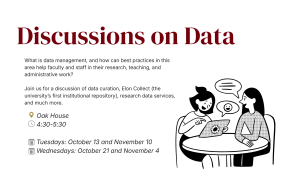
What is data management, and how can best practices in this area help faculty and staff in their research, teaching, and administrative work? Join us at Oak House for Discussions on Data this October and November. We’ll discuss data curation, Â鶹ÊÓƵ Collect (the university’s first institutional repository), research data services, and much more. Whether you’re deeply involved with data or simply curious, come share ideas, ask questions, and help shape future data support initiatives.
Dates
October 13
October 21
November 4
November 10
Time: 4:30-5:30
Location: Oak House
(Nov 14) Fundamentals of Applied Improvisation for Data Communicators and Storytellers
Saturday, November 14, 2026 | 9AM-1PM | Belk Pavilion 208
This workshop will have a cap of 20 attendees, selected on a first-come, first-served basis. Bagels (breakfast) and Pizza (lunch) will be provided.
Attention all data-oriented students, faculty, and staff! Do you sometimes feel like you have developed a strong background in technical data skills but struggle a bit with the more human-centered communication side of things? If so, then Data Nexus has an exciting opportunity for you! Dr. Richard C. Zink is Principal Research Fellow at JMP Statistical Discovery and an adjunct professor in the Department of Biostatistics at the Gillings School of Global Public Health at the University of North Carolina at Chapel Hill. One of Dr. Zink’s personal passions is improvisational theater and over the past several years he has developed this passion into a scholarly pursuit, having taught many domestic and international workshops on applied improvisation to help turn quantitative scientists into quantitative leaders. Dr. Zink will deliver a free workshop on applied improvisation for Â鶹ÊÓƵ students, faculty, and staff.
There is no requirement to be funny, though funny often naturally happens! No experience is required, just an open mind, an eagerness to participate, and a willingness to take risks in a supportive environment.
(December 1) Introduction to Statistical Programming Digital Badge Review Session
Introduction to Statistical Programming Digital Badge Review Session
Who: Anyone who has completed STS2120
When: Tuesday December 1, 4:30 – 5:30
Where: Duke 205
Summary: This session is meant for students who have completed STS2120 and are interested in earning a digital badge that they can show off the SAS knowledge that they learned. During this workshop we will review some SAS procedures such as how to import data and use that data to complete several different procedures in SAS. This session is not meant to teach students how to use SAS, instead it is meant as a refresher for those wanting to earn the digital badge.
(February 10) Why Storytelling Matters Even More in the Age of AI
Why Storytelling Matters Even More in the Age of AI
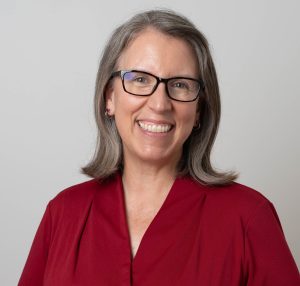
Featuring Dr. Sarah Egan Warren
As artificial intelligence reshapes how we analyze and present information, ethical data storytelling has become an essential skill for every academic discipline. Dr. Sarah Egan Warren will share practical strategies to transform complex ideas into persuasive, human-centered narratives. Frameworks and best practices will be introduced through exercises and examples in this interactive workshop. Behind every data point is a human, and we must intentionally structure how we present information to reflect that reality.
Dr. Sarah Egan Warren has spent her career developing curricula and delivering presentations, training, and instruction in undergraduate, graduate, government, non-profit, and industry settings. Currently, she is on the faculty at the Institute for Advanced Analytics at NC State University, where she created and teaches the technical communication and ethical data storytelling curriculum. She is especially interested in the responsible use of technology, such as AI and VR, to enhance the student learning experience. She is focused on the use of AI in higher education through her involvement as the lead facilitator of the UNC System’s faculty learning community on teaching and learning with AI, and DELTA AI Faculty Fellow.
Congratulations to the 2026 Datafest Data Challenges Winners!
Best in Show
Lleyton Head and Addie Jones
(Team : Data Delinquents)
Best Pitch
Maddy Baird, Skylar Cook, and Shelby Keel
(Team : CTRL-ALT-ELITE)
Best Technical Approach
William Corkey, Bereket Demissew, Ryan Kershner, and Pine Hastings-Wilkins
(Team : B-Team)
Best Data Visualization
Kian Fannin, Joe Mahiti, John McNulty, and Yamur Samli
(Team : Confidence Intervals)
Maddy Baird, Skylar Cook, and Shelby Keel
(Team : CTRL-ALT-ELITE)
Best Use of an External Source
Seth Cushinsky,Oliver Jaffe, Colin Chisholm, and Amelia Weaver
(Team: SPT All-Stars)
Video Archived Events and Workshops
Qualitative Research Series - Session 1
Qualitative Analysis for Quantitative People: Getting Started in Qualitative Research
This session aims to provide a foundational understanding of qualitative research for those more familiar with quantitative methods. We’ll explore the basics of qualitative research, including its philosophical foundations and methodological approaches. Participants will be introduced to various theories applicable to qualitative research, offering them a broader perspective for their studies. We’ll also cover the essential concept of coding qualitative data, equipping attendees with practical skills to better navigate this aspect of qualitative research. This workshop is designed to help participants venture into the world of qualitative research with confidence.
Note: This is one of four sessions being offered about qualitative research. Sessions 2, 3, and 4 will teach participants how to use Dedoose for qualitative research. Participants are welcome to attend any or all of these workshops. You are not required to come to all of them.
Led by Heather Barker, Assistant Professor of Mathematics and Statistics
Co-sponsored by Data Nexus and the Center for Writing Excellence
Qualitative Research Series - Session 2
Software Tools for Qualitative Analysis: An Introduction to Dedoose
In this session, we will walk you through the essential steps of using Dedoose, a powerful qualitative analysis tool. We’ll begin with data preparation, ensuring your research materials are ready for analysis. Then, we’ll provide an overview of Dedoose, highlighting its key features and benefits. You’ll learn how to import your data into the platform, how to create parent and child codes, and how to code your data. We’ll also delve into memoing, an invaluable practice for capturing insights and reflections. Additionally, we’ll explore Dedoose’s collaborative features, enabling you to work efficiently with your research team.
Note: This is one of four sessions being offered about qualitative research. Sessions 2, 3, and 4 will teach participants how to use Dedoose for qualitative research. Participants are welcome to attend any or all of these workshops. You are not required to come to all of them.
Led by Heather Barker, Assistant Professor of Mathematics and Statistics
Co-sponsored by Data Nexus and the Center for Writing Excellence
Participants should bring their laptops with Dedoose installed. Â鶹ÊÓƵ faculty can download for a 30 day free trial. We’ll discuss how you can request a permanent version of Dedoose from Â鶹ÊÓƵ at the workshop (add this to each description).
Qualitative Research Series - Session 3
Using Dedoose to Explore Patterns, Relationships, and Findings
In this session, we will dive into the advanced features of Dedoose, demonstrating how to use descriptors to uncover and examine relationships within your qualitative data. You’ll gain valuable insights into how to identify and analyze connections between themes, categories, and concepts. Furthermore, we’ll showcase the power of creating data visualizations within Dedoose, allowing you to visually map and explore patterns that may have otherwise remained hidden. This session will be helpful for researchers looking to elevate their qualitative analysis and gain a deeper understanding of their data.
Note: This is one of four sessions being offered about qualitative research. Sessions 2, 3, and 4 will teach participants how to use Dedoose for qualitative research. Participants are welcome to attend any or all of these workshops. You are not required to come to all of them.
Led by Heather Barker, Assistant Professor of Mathematics and Statistics
Co-sponsored by Data Nexus and the Center for Writing Excellence
Participants should bring their laptops with Dedoose installed. Â鶹ÊÓƵ faculty can download for a 30 day free trial. We’ll discuss how you can request a permanent version of Dedoose from Â鶹ÊÓƵ at the workshop (add this to each description).
Music as Data: Probability and Machine Learning in Country, R&B, and Beyond - Part 1
Understanding Musical Data, April 10, 2025 – Dr. Christopher White, Associate Professor of Music Theory, UMASS Amherst
Participants will explore musical corpora—large collections of encoded music in a particular style—by analyzing patterns and structures in real-world compositions. Through guided exercises using simple Google Sheets, participants will learn how to: (1) Examine musical distributions (how often certain musical events appear) and (2) Identify transition probabilities (how likely one section of music will follow another).
The Indigenous Perspective Praxis
The Indigenous Perspective Praxis: Holistic Data Science Workflow Designs for Building Community Partnerships, Education and Citizen Engagement.
Featured Speaker : Dr. Joseph Robertson
When: September 23rd, 4:30-5:30pm
Description:The Indigenous Perspective Praxis is Mato Ohitika Analytics LLC’s most recent work in bringing theory to practice using data science workflows to solve community challenges. This interdisciplinary concept connects to Dr. Robertson’s doctoral work in using the Data Sovereignty Initiative framework to educate communities on the ethical examination of how to bridge science and culture.Dr. Robertson will present key topics on data sovereignty, tribal governance, data and artificial intelligence ethics and will demonstrate how to design and build ethical systems using data science.
Biography: Dr. Joseph Robertson is an enrolled member of the Sisseton Wahpeton Oyate of the Lake Traverse Reservation and is the founder and Chief Data Scientist of Mato Ohitika Analytics LLC (MOA).Dr. Robertson’s commitment to speak with students, faculty, community members, and grass roots organizations about his work is part of Mato Ohitika Analytics LLC’s broader educational and citizen science initiatives to bring the Indigenous Perspective praxis’s holistic data science workflow designs to underrepresented communities and to provide equitable access through building academic, cultural, and community partnerships.Dr. Robertson holds a PhD in Computational Science and Statistics and a Master of Science in Statistics from South Dakota State University, and a Bachelor of Science in Mathematics from Colorado State University.
Unlocking Your Data Potential : Creating a Data Portfolio
Unlocking Your Data Potential : Creating a Data Portfolio, October 31, 2024 with Stephen Morris ’11 (AWS), Lee Rainie (Imagining the Digital Future Center), and Ellie Najewicz (IBM).
What to include in your portfolio, finding support to create a portfolio, and how to highlight the digital world.
0 to 70,000 followers in 1 year: how to use data to be an influencer (Using Data to Tell Better Stories on Social Media)
Featuring Dr. Bill Evans, Â鶹ÊÓƵ Assistant Professor of Exercise Science | Thursday September 24| 4:30-5:30pm
We live in a “take culture,� where everyone wants to know everyone else’s opinion, particularly in the sports and fitness industry. In fact, one of the most popular sports commentary shows is literally called First Take. But many of the claims we see online are based more on strong opinions than strong evidence.Over the past year, I’ve grown an Instagram account to more than 70,000 followers by using scientific data to explore common questions, myths, and controversies in sports and fitness. The most successful posts do more than simply present research. They use data to tell a story.In this hands-on workshop, we’ll explore the art of storytelling on social media, how to turn data into content people actually understand and care about. I’ll show all the secrets to Instagram’s data and how it can shape the next story you tell. Attendees will leave with a step by step guide for how to use data to develop their content to increase their following.