


The CEO of the world’s leading accrediting body for engineering education and the North Carolina secretary of commerce highlighted a day of presentations and discovery on Oct. 30, 2026, when the university officially debuted its new School of Engineering and Computing.
An October celebration showcased Â鶹ÊÓƵ’s impact on the fields of engineering and computing science with student presentations and formal remarks by influential engineering education and state economic leaders.
Dozens of university leaders, faculty, staff and students were joined on Oct. 30, 2026, by the CEO of the world’s leading accrediting body for engineering education programs, as well as North Carolina’s secretary of commerce, for a morning of reflection on the rise of Â鶹ÊÓƵ’s new School of Engineering and Computing.
After years of being housed within Â鶹ÊÓƵ College, the College of Arts and Sciences, the university’s longtime engineering and computer science departments combined this fall to formally launch the university’s seventh school, a response to the growing importance of technology and innovative problem-solving across numerous professions.
“Establishing a School of Engineering and Computing reflects Â鶹ÊÓƵ’s commitment to preparing students to be leaders, innovators and problem-solvers,â€� said Â鶹ÊÓƵ President Connie Ledoux Book. “In today’s rapidly changing world, it is important to blend a superior technical education with opportunities for interdisciplinary thinking and experiential learning. Â鶹ÊÓƵ students embrace these opportunities. By doing so, they easily demonstrate how to apply what they learn in the classroom to finding solutions for real clients, with real needs, even before graduating with the skills needed for fulfilling careers and lives of meaning.â€�
“The opening of Â鶹ÊÓƵ’s School of Engineering and Computing marks an important milestone in the university’s continued growth in national prominence,â€� added Â鶹ÊÓƵ Provost Rebecca Kohn. “Faculty from two distinct disciplines are now better positioned to identify and expand opportunities for students to develop the knowledge, creativity, and leadership that are critical to addressing society’s most pressing obstacles. This school will serve as a new model for preparing engineers, developers, game designers, cybersecurity experts and more who will advance their fields while making a difference to so many future clients and communities.â€�

Michael K.J. Milligan, chief executive officer of , delivered keynote remarks at a morning address. North Carolina Secretary of Commerce Lee Lilley shared additional perspectives on the economic impact of engineering and computer science when he offered remarks at a campus luncheon.
“I’m excited to showcase what we’re doing here at Â鶹ÊÓƵ,â€� said John Walz, the inaugural dean of the School of Engineering and Computing. “Students who choose to come to Â鶹ÊÓƵ will receive not only a strong engineering or computer science education but also a great foundation in the liberal arts. Our students will graduate with technical skills, the ability to work in teams and communicate effectively, and the potential to quickly serve as leaders in the field.â€�
The celebration opened with an address from Milligan in which he impressed upon those in attendance the importance of lifelong learning. He also spoke to the need to continuously develop technical skills, interpersonal communication and relationship building.
A panel discussion titled “How Â鶹ÊÓƵ is Educating Engineers and Computer Scientists to Meet the Challenges of Today and Tomorrowâ€� followed. Moderated by Walz, the discussion featured faculty members Professor Shannon Duvall, Professor Sirena Hargrove-Leak, Alex Strassberg ’26, and Kelly Little of Tryon Solutions.
Among the highlights from the panel was advice for students on looking for the right academic fit if pursuing a career in engineering or computing, how Â鶹ÊÓƵ faculty work with students, and what employers are looking for from recent graduates.

“One of the biggest things for me as to why I came to Â鶹ÊÓƵ, was the idea that I could do things beyond just my strict major and be able to engage in things that weren’t just theory,â€� said Strassberg. “When I worked on campus in the theater department, I came up with different ideas for stage lights. And I came (to the Engineering facilities) and built that.â€�
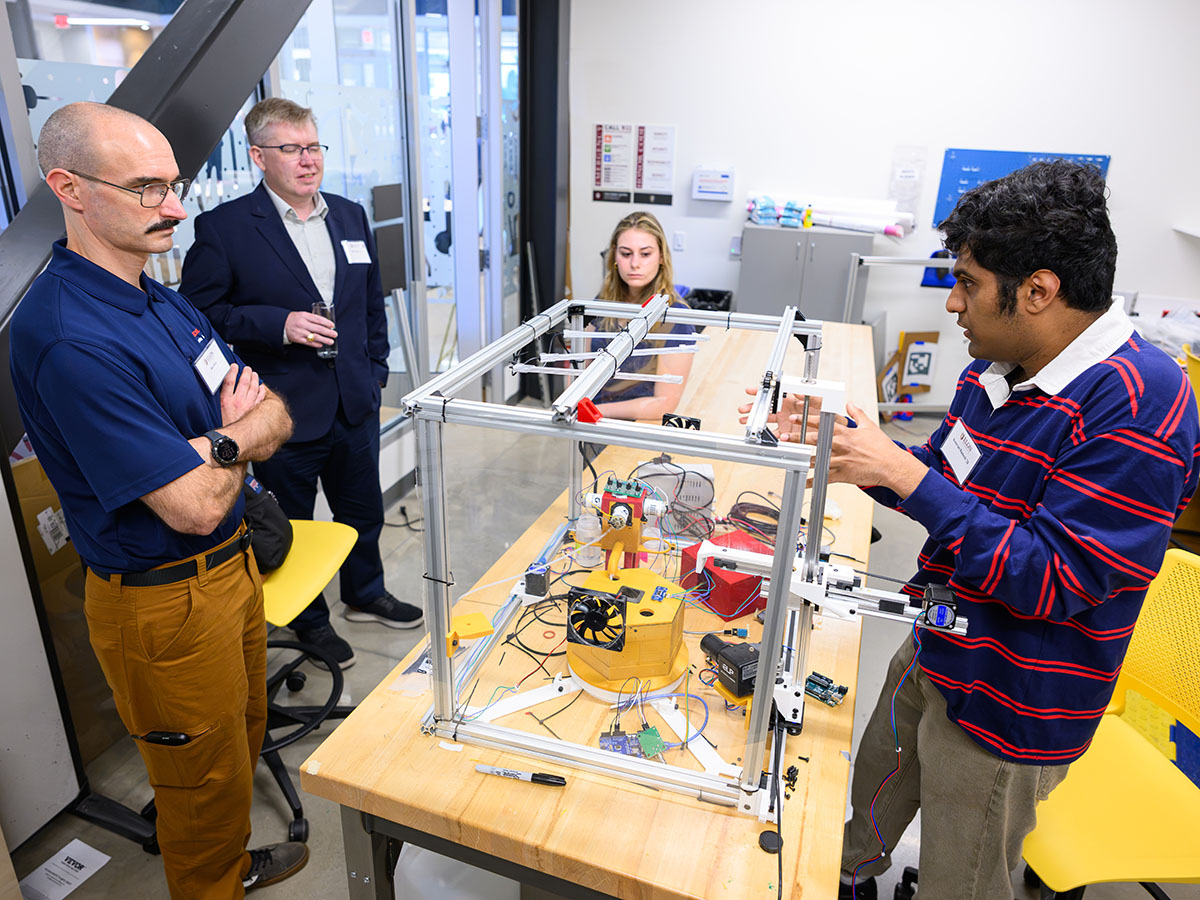
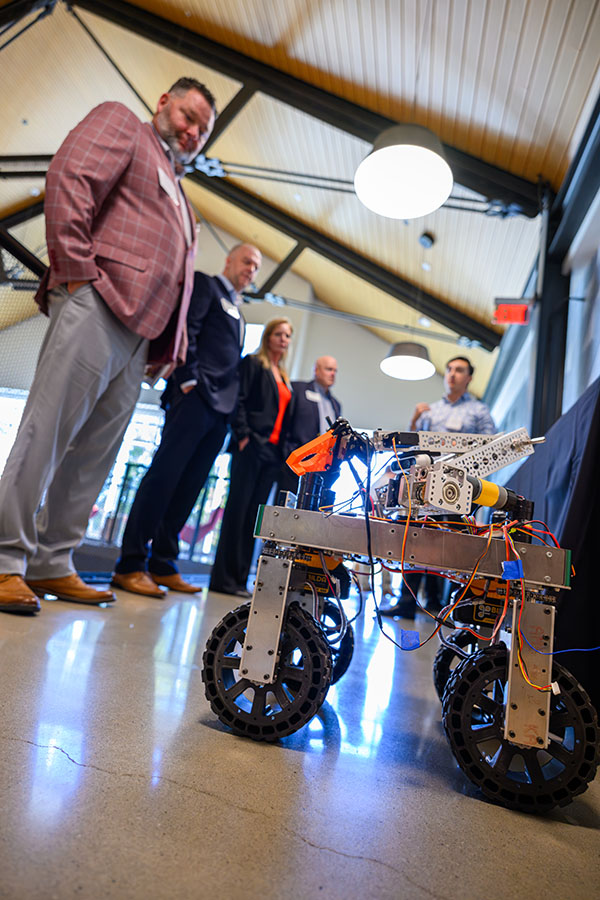
Following the panel discussion, guests discovered work from Â鶹ÊÓƵ students through a showcase that featured projects, research, and innovations from both engineering and computer science, a demonstration of the school’s impact and outcomes from hands-on learning experiences.
The celebration concluded with lunch and Lilley’s message of the role and economic impact of engineering and computing jobs throughout North Carolina. The state’s investment in attracting advanced manufacturing, biotechnology, software development, and other tech industries creates a strong demand for highly skilled graduates, he said.
Lilley spoke about the importance of engineering and computing jobs to the state’s future.
“These professionals drive innovation, improve productivity and keep our state competitive,” he said. “They develop technologies, improve manufacturing processes, solve complex problems and their work helps companies turn ideas into reality. These skills influence where businesses choose to locate and where they choose to expand.â€�