


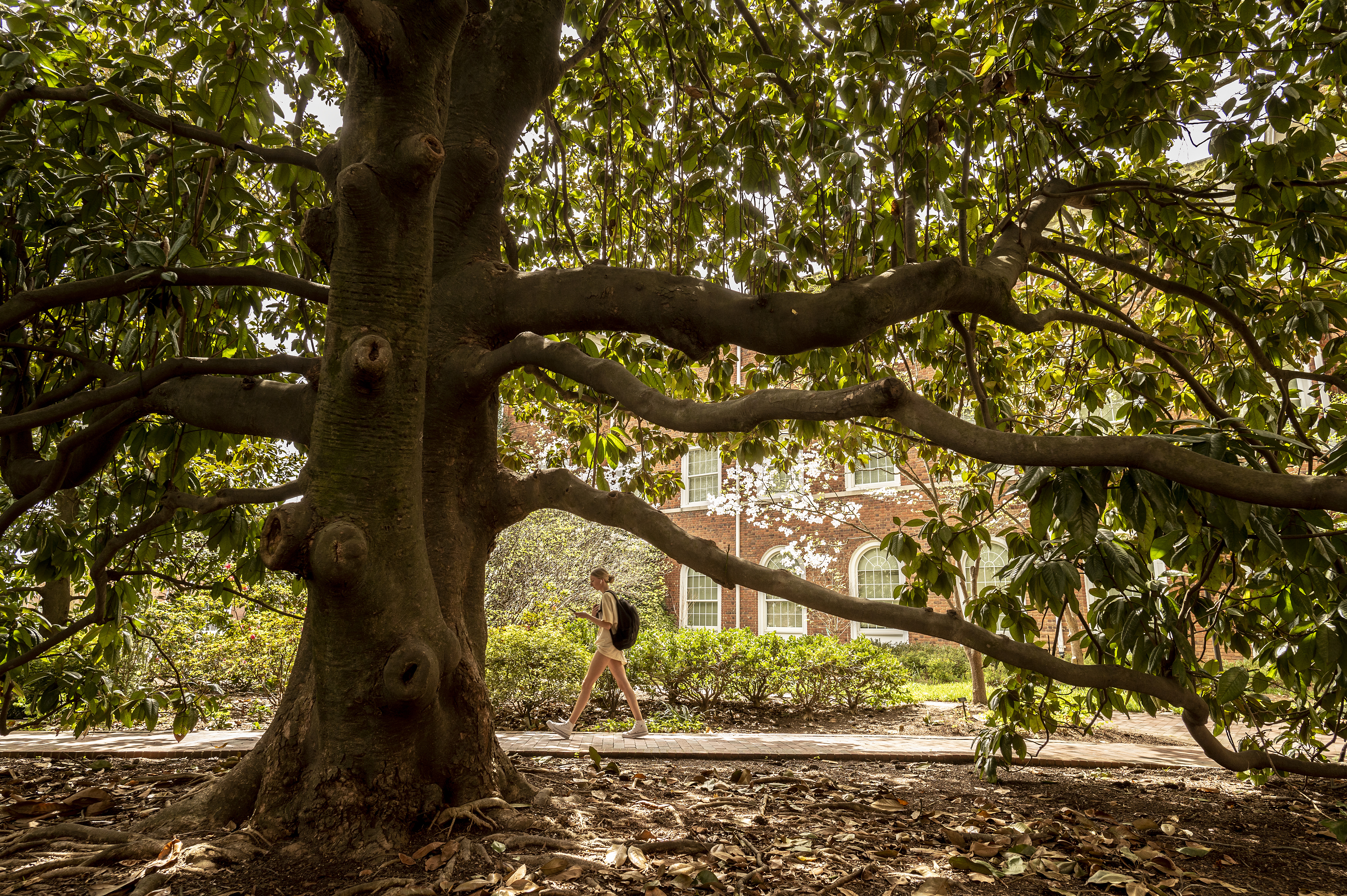
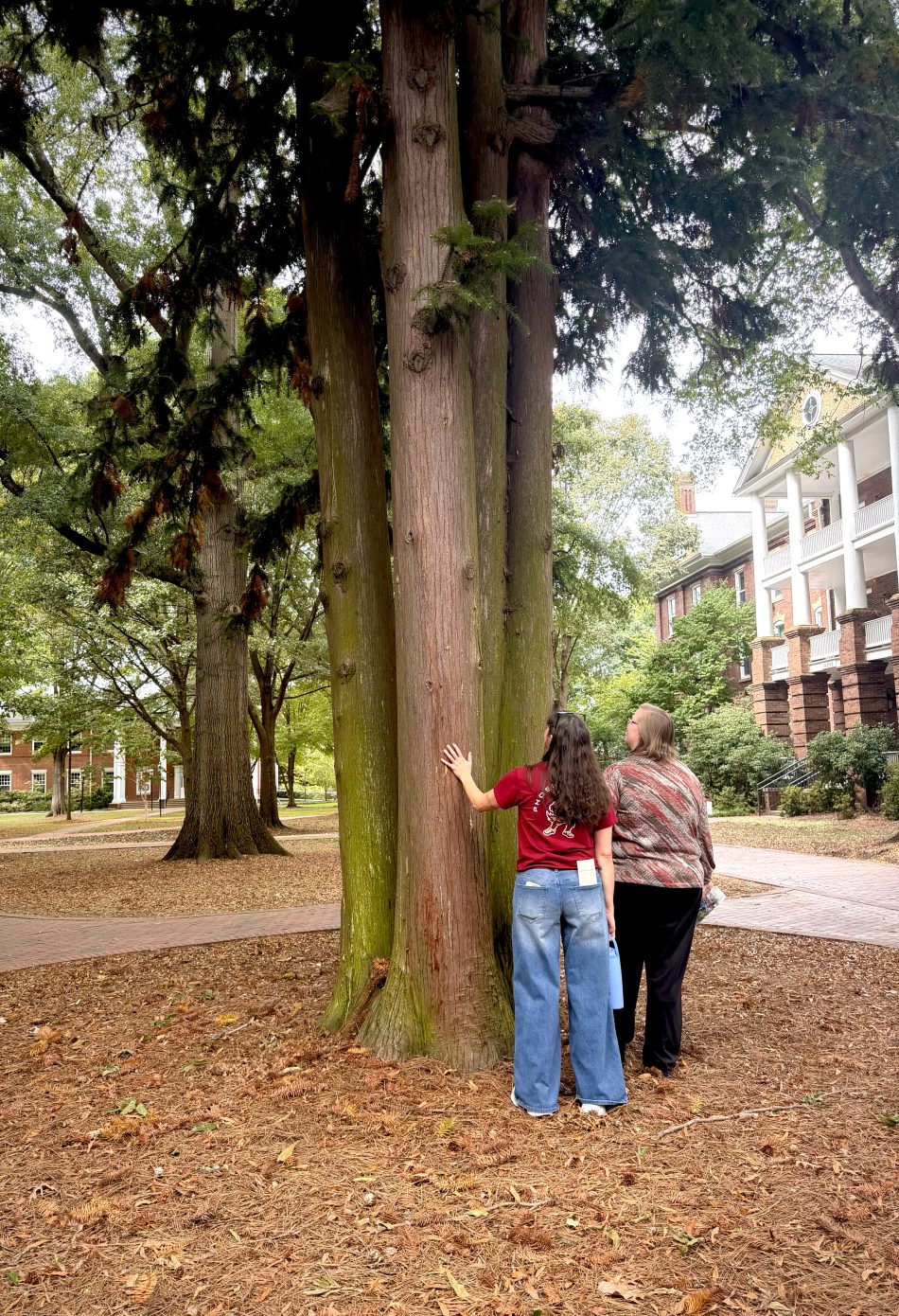
Â鶹ÊÓƵ community members explore the diversity of tree species across campus during a Campus Tree Tour led by campus arborists and botanical garden coordinators.
Â鶹ÊÓƵ’s campus boasts an inventory of over 6,000 adult trees across 125 different species, with capacity for an additional 125 pot-in-pot trees planted in a nursery housed on Loy Farm. This inventory is managed by arborists Wendy Williams and Benjamin Conner, who work to balance a growing campus with tree health.
Having first started as a gardener at Â鶹ÊÓƵ in 1993, Williams has over 33 years of experience managing Â鶹ÊÓƵ’s natural landscape, and was amed the first full-time arborist in 2006.
“I love all types of plants, but here at Â鶹ÊÓƵ, I do feel the trees are the most special part of living or working on Â鶹ÊÓƵ’s campus. It’s a privilege to be able to work with these beauties,” Williams said.
When asked about her job, Williams shared that she and Conner are “first and foremost responsible for assessing the health and condition of the trees. [They] then mitigate the issues that are in-house responsibilities. This could be removing dead or dying branches or pruning to train young trees to develop a good branching structure. [They] also prune for building clearance or to allow for vehicular or pedestrian traffic.�
Alongside these landscaping responsibilities, the arborists also maintain a few hundred identification labels that display a trees’ common name, scientific name and family. These efforts support Â鶹ÊÓƵ’s botanical garden and its ArbNet Accreditation.
Conner is the newest addition to Â鶹ÊÓƵ’s landscaping and grounds crew, serving as Â鶹ÊÓƵ’s second arborist on campus. On Oct. 9, Conner helped guide the semesterly Campus Tree Walk with Â鶹ÊÓƵ’s Botanical Garden Coordinator, Philip Perez. This tour covers a 1.25-mile walk around the core of Â鶹ÊÓƵ’s campus, where community members can interact with well over 100 different species of trees. This campus walk introduces students, faculty and staff to a variety of trees ranging from the Paperbark Maple to the Tricolor European Beech, to the 14 different oak species represented in Historic neighborhood’s “Under the Oaks.â€�
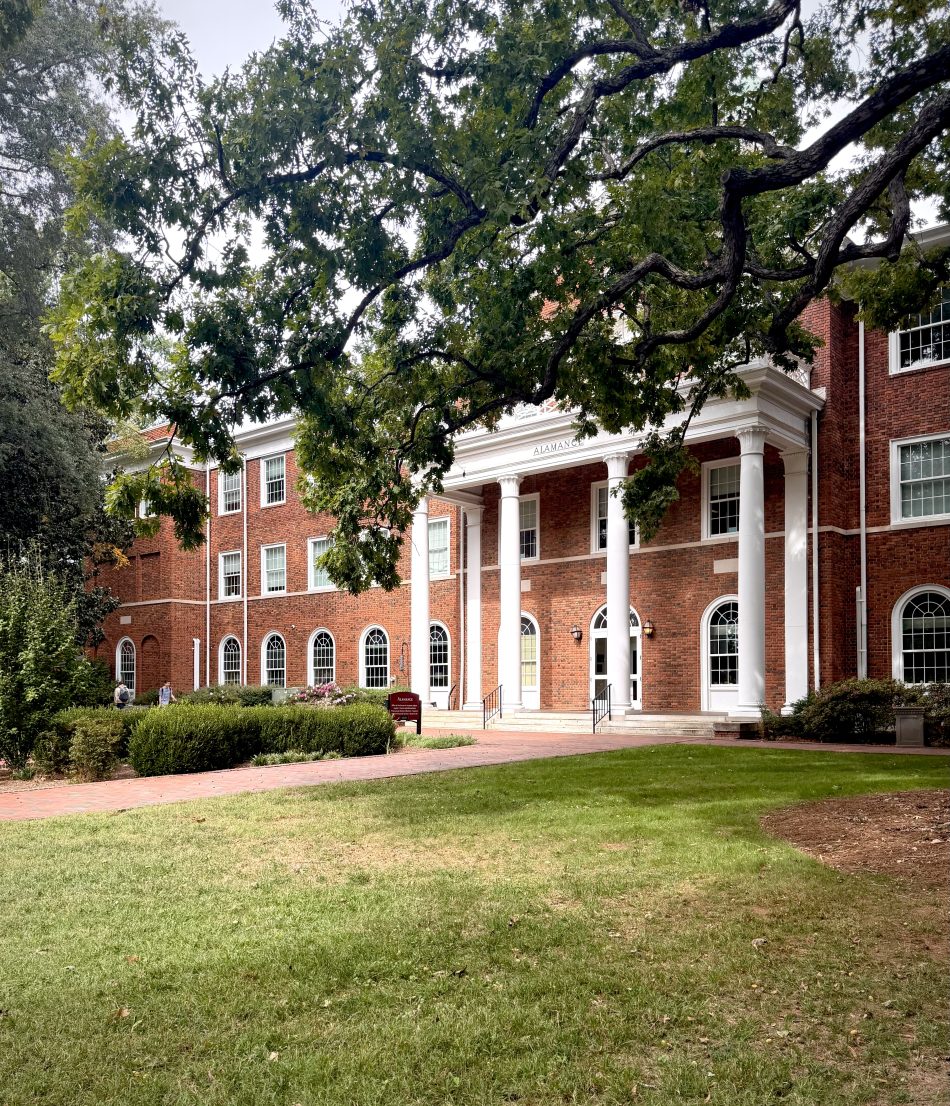
Of these oak trees, Conner and Perez paid special attention to the White Oak growing behind Alamance. This tree has been on campus since the school was founded and is the inspiration for the iconic oak leaf on Â鶹ÊÓƵ’s flag. Having survived the 1923 fire, the tree underwent a specialized process known as “tree surgery,â€� where concrete was poured into the open wound of the tree caused by the fire to preserve its structural integrity. Having grown over this concrete wound, this oak tree continues to thrive on campus and produce the acorns littered across the bricks.
Campus tree walks are typically held each semester and are an opportunity for both the arborists and Â鶹ÊÓƵ community members to learn more about the trees on campus.
“(Giving tours with the Office of Sustainbility) makes me focus once or twice a year on gathering tree facts,” Williams said. “Every year, I uncover things I never knew. I love sharing my enthusiasm for trees and meeting fellow tree huggers!â€�