


Three Â鶹ÊÓƵ employees recently attended the Association for the Advancement of Sustainability in Higher Education’s annual Conference and Expo to connect and exchange ideas with colleagues from around the world.
Three Â鶹ÊÓƵ employees recently attended the Association for the Advancement of Sustainability in Higher Education’s annual Conference and Expo to connect and exchange ideas with colleagues from around the world.
From Oct. 4-6, Elaine Durr, senior director of sustainability; Kelly Harer, associate director of sustainability for education and outreach; and Jameka Pinnix, associate director of student bias education and response, participated in AASHE’s annual Conference and Expo in Baltimore, Maryland.
During this conference, Durr was recognized as an AASHE Fellows Award winner, an honor that celebrates mid-career individuals who are significantly contributing to the advancement of sustainability in higher education.
“AASHE’s annual conference is an incredible opportunity to exchange resources and ideas with colleagues across the globe who are working to make their own institutions more sustainable,” noted Harer. “Between the Conference & Expo and the resources provided throughout the year, AASHE is a great resource for any student, faculty or staff interested in sustainability in higher education, and I highly recommend folks take advantage of this wonderful resource!â€�
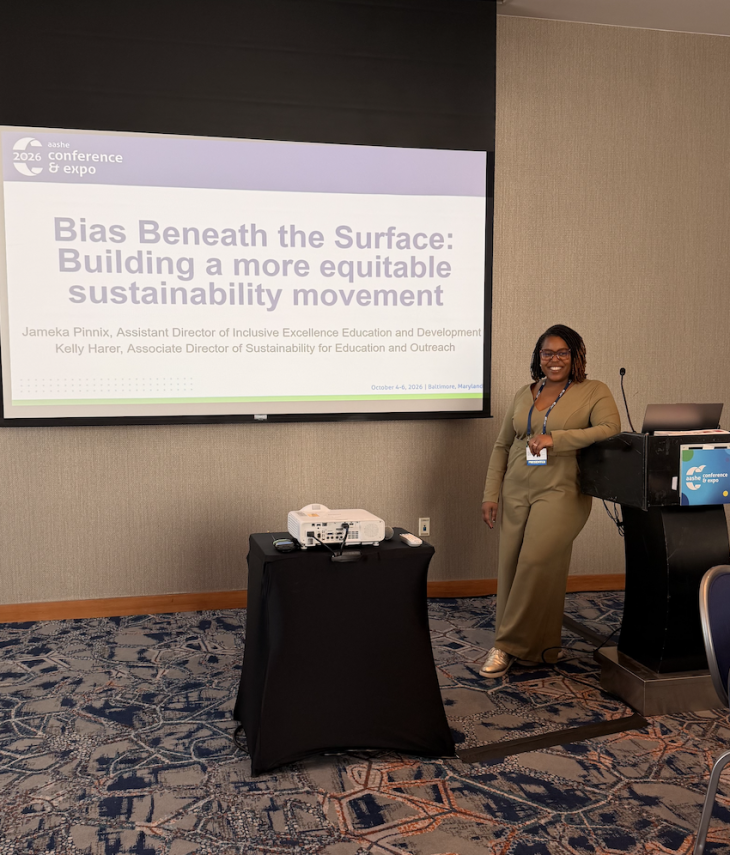
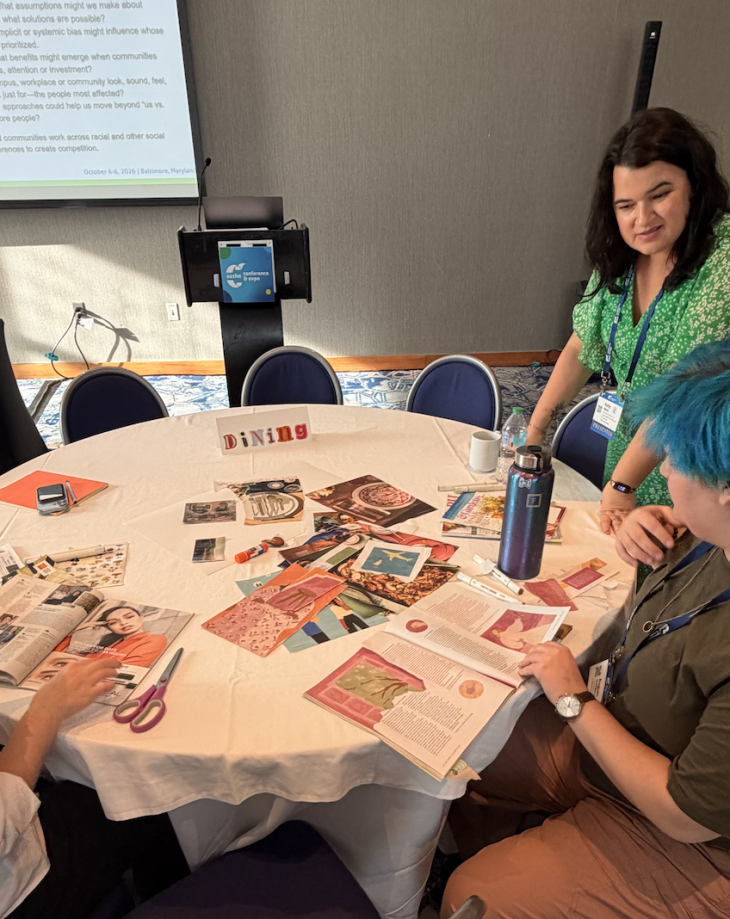
Pinnix and Harer co-presented “Bias Beneath the Surface: Building a More Equitable Sustainability Movement�, which helped participants learn how to identify bias in sustainability efforts at their own institutions. Through guided reflection, facilitated conversations, and vision boarding, participants were encouraged to identify actions and efforts to interrupt bias.
Pinnix shared why presenting at AASHE was meaningful to her, explaining that the presentation “brought together two areas I care deeply about: bias education and sustainability. Creating more equitable and sustainable communities requires us to be intentional about who is included, whose voices are heard, and who benefits.�
This engagement with AASHE highlights how sustainability extends beyond environmental initiatives to include equity, representation, and the importance of ensuring that sustainability efforts benefit communities beyond higher education.
The Association for the Advancement of Sustainability in Higher Education (AASHE) is an organization that empowers institutions, faculty, staff and students to drive sustainability efforts in higher education. AASHE offers a variety of opportunities to connect, including conferences, weekly newsletters, professional toolkits, and networking, as well as universal standards and rating systems. By defining sustainability metrics for higher education institutions and providing access to resources, AASHE equips institutions and future leaders to advance sustainable initiatives in higher education.
For Â鶹ÊÓƵ students, faculty and staff, AASHE is a great resource to understand sustainability efforts at Â鶹ÊÓƵ and beyond. All Â鶹ÊÓƵ students, faculty and staff can create an AASHE account using their Â鶹ÊÓƵ email address. With several free key resources, AASHE aims to inform and connect key players in the future of sustainability. These resources include a Campus Sustainability Hub, which provides toolkits on topics ranging from research to campus grounds and community engagement, as well as the Sustainability Tracking, Assessment & Rating System (STARS), a self-reporting framework that helps colleges and universities assess their overall sustainability performance.
STARS is a ranking system open to all higher education institutions, and the criteria for these ratings are transparent and easily accessible. Community members across Â鶹ÊÓƵ’s campus and higher education are able to compare sustainability efforts and successes while also learning from other institutions through this transparent framework. In March of 2026, Â鶹ÊÓƵ received its’ eighth STARS silver rating.