


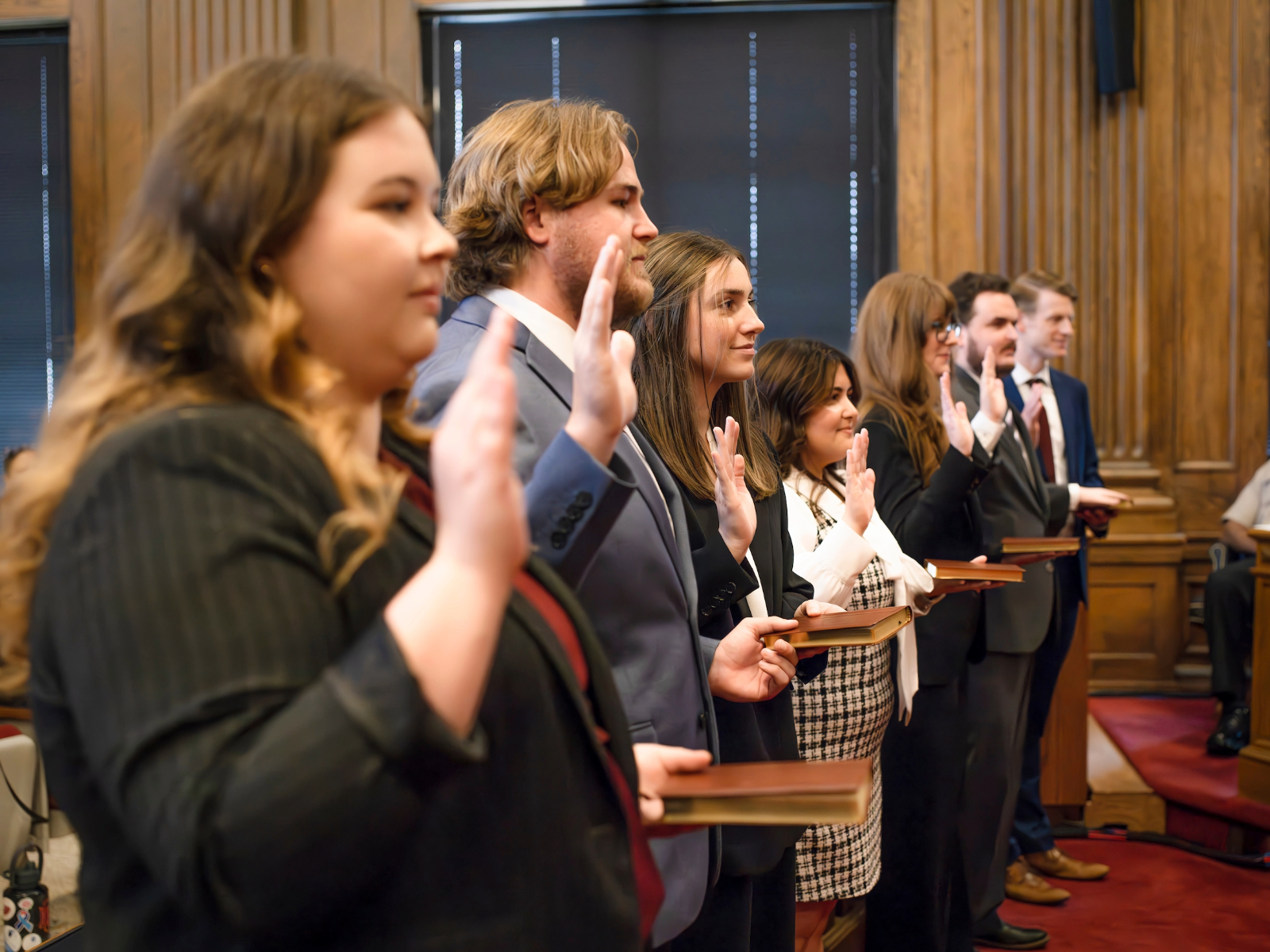
PreLaw Magazine features the School of Law’s curriculum and immersive Residency-in-Practice Program as models for experiential legal education, ranking it No. 11 nationally in its annual list of “Best Law Schools for Practical Training.�
For the fourth consecutive year, Â鶹ÊÓƵ School of Law has earned an A+ rating for practical training from PreLaw Magazine, maintaining its place among the nation’s leaders in experiential legal education.
In the influential publication’s 2026 , Â鶹ÊÓƵ Law is No. 11 nationally — the highest-ranked law school in the Southeast and the only school in North Carolina among the top 35.
, with its required Residency-in-Practice Program highlighted as a model for immersive, practice-based legal education. All Â鶹ÊÓƵ Law students spend 10 weeks in the winter or spring of their second year in full-time placements with practicing lawyers, judges and legal teams, graduating with hands-on experience in the day-to-day realities of legal practice.
“You cannot graduate from Â鶹ÊÓƵ Law without knowing exactly what it’s like to be a lawyer,â€� Â鶹ÊÓƵ Law Dean Zak Kramer said in the article. “The legal practice becomes their classroom … They leave law students and come back lawyers.â€�
The article also features insights from Patricia Perkins, Â鶹ÊÓƵ Law’s associate dean of academic affairs and professor of law. “Our curriculum is designed to assist students in transforming into the lawyers they want to be,â€� she said. “Skills are just as important to develop as a knowledge base.â€�
PreLaw Magazine graded and ranked schools based on student participation in clinics, externships, simulation courses, moot court and other special programs.
Â鶹ÊÓƵ Law offers students a broad array of opportunities to hone practical training skills throughout their 2.5 years of study. Those include:
- Full-time residencies-in-practice
- Lab and simulation courses
- Five clinics (immigration, small business and entrepreneurship, wills drafting, Social Security disability benefits and guardian ad litem appellate advocacy)
- Moot court and mock trial teams
- Internships, externships and judicial clerkships
- Bridge-to-practice courses
- Involvement with the Pro Bono Board
Â鶹ÊÓƵ Law adopted its 2.5-year, seven-trimester full-time curriculum in 2014, making it the only American law school to intentionally design a program where all students graduate in December and can sit for the February bar exam — months ahead of peers from other institutions. (In 2026, 91.96% of Â鶹ÊÓƵ Law’s first-time North Carolina bar takers passed the exam.)
By completing their legal studies nearly six months faster than traditional programs, Â鶹ÊÓƵ Law’s full-time graduates have lowered their average student debt at graduation by almost a third since the curriculum was adopted.
For more information on Â鶹ÊÓƵ Law and the application process, visit the law school’s admissions page. Â鶹ÊÓƵ Law continues to actively admit the Â鶹ÊÓƵ Law Class of 2028, which will enroll in August 2026.