


In this edition of #Â鶹ÊÓƵTBT, we celebrate 40 years since a major advancement in technology at Â鶹ÊÓƵ: the purchase of the university's first academic computer.
In the #Â鶹ÊÓƵTBT series, the Â鶹ÊÓƵ News Bureau, along with Archives & Special Collections, will flash back to the past to take a look at Â鶹ÊÓƵ over the years. You will find videos, newspaper clippings, photos and more to celebrate Â鶹ÊÓƵ’s past, while looking ahead to the future. Follow along on E-Net and the university’s ,ÌýÌý²¹²Ô»åÌý pages every Thursday to see what we dig up.
Today’s Â鶹ÊÓƵ students have access to a wealth of technology – computers, video and audio devices, and more – but, 40 years ago the school’s technological journey was just beginning.
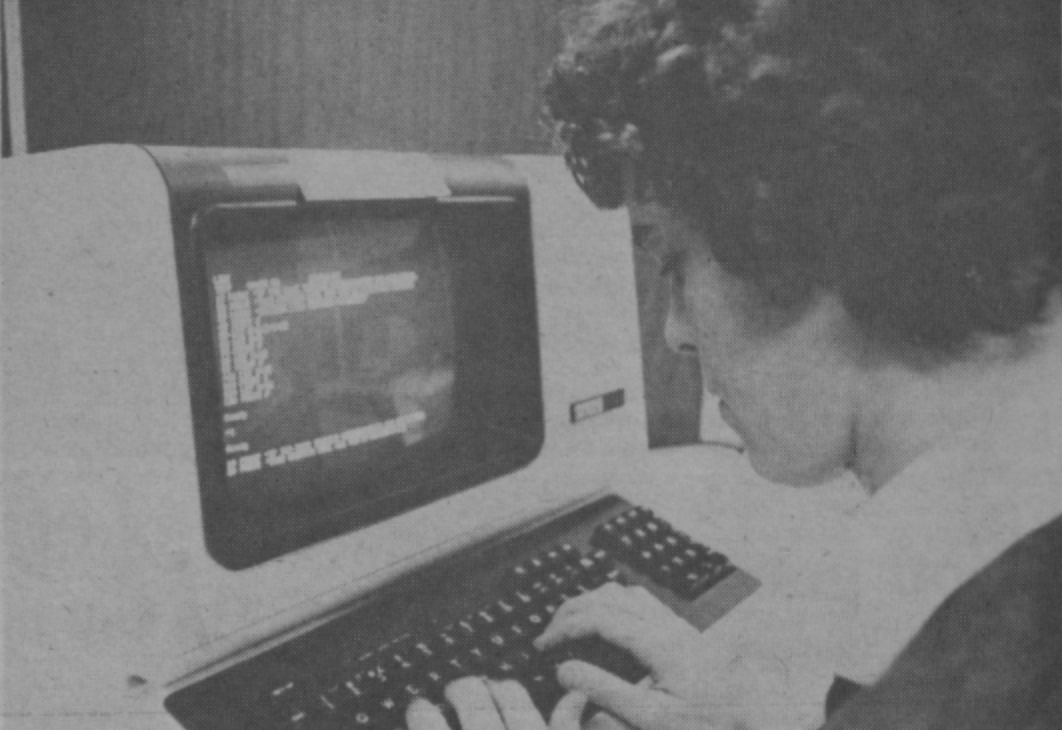
In 1979, Â鶹ÊÓƵ College purchased its first academic computer for the campus. The DEC PDP 11/34 could handle input from 16 users at one time and store 56 million letters or numbers on two disk drives, or more than 256,000 characters on a single drive.

The computer was a pricey investment for Â鶹ÊÓƵ, costing at least $60,000, according to the Sept. 27, 1979, edition of The Pendulum student newspaper.
According to “From a Grove of Oaks: The Story of Â鶹ÊÓƵ” by George Troxler, the computer was housed in two units “the size of filing cabinets” at the Learning Resource Center (later named the LaRose Resource Center) located within Mooney Building. Faculty and students could access the computer via terminals inside the center.
During the 1980 winter term, the campus offered its first computer course. Math Professor Gerald Francis, who would later become Â鶹ÊÓƵ’s provost and executive vice president, spearheaded the effort to establish a Computer Science minor, which would evolve into the Computer Science major in 1982.

The computer purchase was made possible by a $2 million federal Title III Advanced Institutional Development grant awarded to Â鶹ÊÓƵ in 1977. The grant was not to be used for buildings or for the school’s endowment, but to enhance Â鶹ÊÓƵ’s programming budget over a five-year period.
Along with the computer, the grant helped Â鶹ÊÓƵ create three new faculty positions, strengthen and revise its course offerings, establish an honors program and launch the academic advising department, along with other projects.
By the 1984-85 academic year, Â鶹ÊÓƵ housed three computer labs on campus, which gave students access to personal computers to enhance their studies.
In “From a Grove of Oaks,” Â鶹ÊÓƵ’s seventh president, Fred Young, said the AIDP grant “provided a turning point in Â鶹ÊÓƵ’s development and led to the unprecedented expansion in the 1980s.”
Do you have any special pieces of Â鶹ÊÓƵ history? Share your photos and videos with us via email at news@elon.edu or using the hashtag #Â鶹ÊÓƵTBT on ,ÌýÌý²¹²Ô»åÌý.